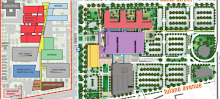
$46.3 million - land acquisitions
$4.1 million for legal services related to buying or expropriating the 244 parcels on the Mid-City footprint
$2.6 million on relocation programs, including $721,805 of that on professional services contracts
$284,581 on demolitions
The other costs listed in the Times-Picayune article may or may not have been similar for a retrofit of Charity Hospital.
But the bottom line remains valid: The UMC site, as proposed for Lower Mid-City, has resulted in the project costing much more than it needed to cost. The choice has also significantly delayed the return of care.
The state is missing out on the ability to use historic tax credits in any way by refusing to go into Charity. It has also spent over $50 million more than needed because it chose the Lower Mid-City site as opposed to a viable alternative - at a time when it remains hundreds of millions of dollars short of the funding necessary for the Lower Mid-City option, and when the Charity retrofit would have been less expensive overall.
Showing posts with label State of Louisiana. Show all posts
Showing posts with label State of Louisiana. Show all posts
Friday, July 15, 2011


Thursday, July 7, 2011
Fundamental Questions about the UMC
These are such simple questions, that they've been somewhat overlooked by far too many in the ongoing fight over the UMC hospital:
Is the UMC (University Medical Center Management Corporation Board) - created by the State of Louisiana to secure funding for and operate the proposed University Medical Center (and formerly the EARL K. LONG MEDICAL FOUNDATION, INC.) - a public or private entity for purposes of determining whether a government taking involves a legitimate "public purpose"?
Upon legal challenge, would expropriation of various private properties in the LSU Footprint by the LSU Board of Supervisors be found valid under the Louisiana State Constitution?
I don't know that these questions have truly been answered. With dozens of UMC property-related lawsuits underway, perhaps we'll slowly see answers emerge. Or perhaps we'll learn sooner. Feel free to opine in the comments.
Is the UMC (University Medical Center Management Corporation Board) - created by the State of Louisiana to secure funding for and operate the proposed University Medical Center (and formerly the EARL K. LONG MEDICAL FOUNDATION, INC.) - a public or private entity for purposes of determining whether a government taking involves a legitimate "public purpose"?
Upon legal challenge, would expropriation of various private properties in the LSU Footprint by the LSU Board of Supervisors be found valid under the Louisiana State Constitution?
I don't know that these questions have truly been answered. With dozens of UMC property-related lawsuits underway, perhaps we'll slowly see answers emerge. Or perhaps we'll learn sooner. Feel free to opine in the comments.
Wednesday, July 6, 2011
Keep in mind
As I continue to harp on the lack of full UMC financing - and the prospect of over a hundred million dollars annually in required state taxpayer subsidy - I hope readers will keep this in mind:
"Truth in Accounting: Louisiana’s state financial burden even worse than California’s
NEW ORLEANS, La. – The Institute for Truth in Accounting’s state ranking for assets relative to liabilities, released this week, finds Louisiana to be the second most indebted state in the South.
Despite a balanced budget requirement, Louisiana has still managed to acquire $21 billion more in liabilities than it has assets to offset them. That equates to $16,800 per taxpayer, even worse than California’s $15,100. In the South, only Kentucky surpasses Louisiana with $23,800 per taxpayer."
Concerns about the ability to finance initial construction of the UMC - and sustain its operations over time - are not mere chimerical roadblocks raised solely to slow the project. They're genuine concerns based on systemic fiscal issues that the state faces moving forward. And the state's inability to fund the $15 million necessary to fund the completion of the Cancer Center across Tulane Avenue should be giving reasonable folks pause.
The LSU Footprint forecast at this point still looks very much like a vacant 37-acre site with a slight chance of building.
"Truth in Accounting: Louisiana’s state financial burden even worse than California’s
NEW ORLEANS, La. – The Institute for Truth in Accounting’s state ranking for assets relative to liabilities, released this week, finds Louisiana to be the second most indebted state in the South.
Despite a balanced budget requirement, Louisiana has still managed to acquire $21 billion more in liabilities than it has assets to offset them. That equates to $16,800 per taxpayer, even worse than California’s $15,100. In the South, only Kentucky surpasses Louisiana with $23,800 per taxpayer."
Concerns about the ability to finance initial construction of the UMC - and sustain its operations over time - are not mere chimerical roadblocks raised solely to slow the project. They're genuine concerns based on systemic fiscal issues that the state faces moving forward. And the state's inability to fund the $15 million necessary to fund the completion of the Cancer Center across Tulane Avenue should be giving reasonable folks pause.
The LSU Footprint forecast at this point still looks very much like a vacant 37-acre site with a slight chance of building.
Friday, June 3, 2011
"the council gives up the city's ownership of the streets in the 37-acre area"
Times-Picayune: New Orleans City Council votes to close streets in hospital footprint
The Lens tweeted the meeting, sharing a number of nuanced observations and quotes - like this one about Jerry Jones losing his temper. And this one, shortly thereafter, as he was clearly fuming, dismissive of the city council's legal role under the city charter, and ticked at Stacy Head for challenging him.
You can also watch the debate on the street revocation here.
The Lens tweeted the meeting, sharing a number of nuanced observations and quotes - like this one about Jerry Jones losing his temper. And this one, shortly thereafter, as he was clearly fuming, dismissive of the city council's legal role under the city charter, and ticked at Stacy Head for challenging him.
You can also watch the debate on the street revocation here.
Thursday, May 19, 2011

Thursday, May 5, 2011
State of Louisiana, Jacobs Engineering tried to evade programmatic agreement, avoid public input on Charity Hospital adaptive reuse
On October 18, 2010, the State of Louisiana, using Jacobs Engineering as a facilitator, held a public meeting at City Hall regarding the adaptive reuse of Charity Hospital. Numerous people and parties attended, and emotions ran high against the state's failure to retrofit Charity - or even discuss that option. The facilitator was visibly shaken by the raucous experience.
Recently, several consulting parties have learned that they were not given actual notice of two public meetings held on March 16 and March 30 regarding the adaptive reuse of Charity Hospital. Not a single member of the public attended either meeting - and, indeed, it's unclear whether the third meeting was only held because notice wasn't actual run in a timely fashion in the paper...or because not a single person attended the second meeting. The BioDistrict and LSU had people on hand, but they apparently were not considered public attendees by the organizers, which is strange.
Talking to several consulting parties, it seems nobody was even emailed by the state or Jacobs regarding these meetings. The state did tuck at least one notice in the back sections of the Times-Picayune, however. Here's the only one I can find.
This was very clearly an attempt to evade giving consulting parties and the public notice of the public meetings. The state will argue that the fine print newspaper notices were sufficient to meet its obligations of notice, and that it has now fulfilled its public meetings requirements. And perhaps that would or would not fly in a court of law.
But it's downright shady. It's shady as all hell. Mr. Bilyeu with Jacobs Engineering definitely has the emails of the consulting parties that are to be provided with notice per a September 2010 mass email he sent out regarding an adaptive reuse workshop (not a public meeting). From my experience in several Section 106 processes, the federal agency or responsible entity typically emails the consulting parties regarding meetings. Consulting parties have indicated that they have either a position or an interest that goes even beyond that of the public more generally when it comes to participating in the process.
Keep in mind, too, that these March public meetings are coming AFTER a January Jacobs-headed meeting to issue an RFP for Charity - a meeting that consulting parties were not told about.
Here's the requirement in the Programmatic Agreement that governs the Charity adaptive reuse process:
FP&C will endeavor to promote adaptive reuse for those nine
historically significant buildings that neither it nor other state
agencies use. During this process, FP&C will give notice to the
SHPO and to those groups and individuals who participated in this
Section 106 process as Consulting Parties. Additionally, public
meetings and/or forums will be held at no less than 2 points in the
process of evaluating the reuse or transfer of these properties from
State control, to solicit input and comments from the interested
parties.
My overarching question: what are they so afraid of...? Public meetings or forums on adaptive reuse don't even involve binding input. To diverge from past notice practices to avoid attendance and to have zero attendance subsequently result shows an intentional desire by Facilities Planning and Control to keep the public from having a say as mandated in the programmatic agreement.
Now that the BioDistrict has been shopping around its own proposals for reuse of the building, it's all starting to make a bit more sense. Mr. Jim McNamara, head of the BioDistrict, was at both March meetings.
Recently, several consulting parties have learned that they were not given actual notice of two public meetings held on March 16 and March 30 regarding the adaptive reuse of Charity Hospital. Not a single member of the public attended either meeting - and, indeed, it's unclear whether the third meeting was only held because notice wasn't actual run in a timely fashion in the paper...or because not a single person attended the second meeting. The BioDistrict and LSU had people on hand, but they apparently were not considered public attendees by the organizers, which is strange.
Talking to several consulting parties, it seems nobody was even emailed by the state or Jacobs regarding these meetings. The state did tuck at least one notice in the back sections of the Times-Picayune, however. Here's the only one I can find.
This was very clearly an attempt to evade giving consulting parties and the public notice of the public meetings. The state will argue that the fine print newspaper notices were sufficient to meet its obligations of notice, and that it has now fulfilled its public meetings requirements. And perhaps that would or would not fly in a court of law.
But it's downright shady. It's shady as all hell. Mr. Bilyeu with Jacobs Engineering definitely has the emails of the consulting parties that are to be provided with notice per a September 2010 mass email he sent out regarding an adaptive reuse workshop (not a public meeting). From my experience in several Section 106 processes, the federal agency or responsible entity typically emails the consulting parties regarding meetings. Consulting parties have indicated that they have either a position or an interest that goes even beyond that of the public more generally when it comes to participating in the process.
Keep in mind, too, that these March public meetings are coming AFTER a January Jacobs-headed meeting to issue an RFP for Charity - a meeting that consulting parties were not told about.
Here's the requirement in the Programmatic Agreement that governs the Charity adaptive reuse process:
FP&C will endeavor to promote adaptive reuse for those nine
historically significant buildings that neither it nor other state
agencies use. During this process, FP&C will give notice to the
SHPO and to those groups and individuals who participated in this
Section 106 process as Consulting Parties. Additionally, public
meetings and/or forums will be held at no less than 2 points in the
process of evaluating the reuse or transfer of these properties from
State control, to solicit input and comments from the interested
parties.
My overarching question: what are they so afraid of...? Public meetings or forums on adaptive reuse don't even involve binding input. To diverge from past notice practices to avoid attendance and to have zero attendance subsequently result shows an intentional desire by Facilities Planning and Control to keep the public from having a say as mandated in the programmatic agreement.
Now that the BioDistrict has been shopping around its own proposals for reuse of the building, it's all starting to make a bit more sense. Mr. Jim McNamara, head of the BioDistrict, was at both March meetings.
"All of this is confusing. None of it follows a path of logic. None of it follows a business plan."
Several news stories have already covered this. But here's video of the legislative committee hearing from Monday where the state's Office of Facilities and Planning Control made a presentation to legislators on the proposed UMC hospital:
Part 1
Part 2
A few quick items that can be gleaned from the presentation itself:
- The construction manager at risk may still find the project will cost more than budgeted, then the state will work to fit the project into the budget. In other words, the overall quality of the facility and its offerings may yet be compromised.
- Despite claims of synergy between the two hospitals, Mr. Jerry Jones states clearly that the UMC is directly "in competition with the VA" for construction workers and that such competition is driving the excessively rapid timeline for the site.
- The City of New Orleans has apparently agreed to donate property in the 2900 block of Tulane Avenue to receive the McDonogh No. 11 School, which the state still proposes for moving.
- The state will not acquire Orleans House, which we've known, and confirmed that it will not acquire the Cox Communications blockhouse hub in the 1900 block of Canal Street.
- The state may not build the second parking garage required by the CEA with the City of New Orleans - a predicate for permitting street revocation. Per Jerry Jones: “that may be able to be delayed until we expand the hospital”. "We don't think the other parking garage is absolutely necessary" "if it is determined to be needed" This stands to undercut the Mayor's negotiated outcome given the uncertainty over whether the hospital will ever expand, much less be built.
- The state will go vertical in January whether or not it has HUD financing.
- The state still says it will move historic houses off the site. In the past two weeks, multiple buildings have been demolished. In the past six months, over a dozen buildings that could have been moved were demolished.
- The state will be "messin' around in the dirt for several months" before it goes vertical.
- Jerry Jones continues to indicate, until pressed, that the state has money in hand that it does not yet actually have in hand - $135 million more from FEMA, for example.
The follow-up from the legislators is really the best part, however. That's where some healthy skepticism finally comes into play.
"We're moving forward on a project...and we don't know what we're building." - Representative Fannin
"All of this is confusing. None of it follows a path of logic. None of it follows a business plan." - Fannin
Part 1
Part 2
A few quick items that can be gleaned from the presentation itself:
- The construction manager at risk may still find the project will cost more than budgeted, then the state will work to fit the project into the budget. In other words, the overall quality of the facility and its offerings may yet be compromised.
- Despite claims of synergy between the two hospitals, Mr. Jerry Jones states clearly that the UMC is directly "in competition with the VA" for construction workers and that such competition is driving the excessively rapid timeline for the site.
- The City of New Orleans has apparently agreed to donate property in the 2900 block of Tulane Avenue to receive the McDonogh No. 11 School, which the state still proposes for moving.
- The state will not acquire Orleans House, which we've known, and confirmed that it will not acquire the Cox Communications blockhouse hub in the 1900 block of Canal Street.
- The state may not build the second parking garage required by the CEA with the City of New Orleans - a predicate for permitting street revocation. Per Jerry Jones: “that may be able to be delayed until we expand the hospital”. "We don't think the other parking garage is absolutely necessary" "if it is determined to be needed" This stands to undercut the Mayor's negotiated outcome given the uncertainty over whether the hospital will ever expand, much less be built.
- The state will go vertical in January whether or not it has HUD financing.
- The state still says it will move historic houses off the site. In the past two weeks, multiple buildings have been demolished. In the past six months, over a dozen buildings that could have been moved were demolished.
- The state will be "messin' around in the dirt for several months" before it goes vertical.
- Jerry Jones continues to indicate, until pressed, that the state has money in hand that it does not yet actually have in hand - $135 million more from FEMA, for example.
The follow-up from the legislators is really the best part, however. That's where some healthy skepticism finally comes into play.
"We're moving forward on a project...and we don't know what we're building." - Representative Fannin
"All of this is confusing. None of it follows a path of logic. None of it follows a business plan." - Fannin
Saturday, April 16, 2011
Another One Razed

The house at 2127 Palmyra is gone, demolished in the LSU Footprint after the state paid $171,800 for the property.
Here's a shot of the house, lived in, back in October on the night of the final Oktoberfest at Deutsches Haus.
Here's a view of the front porch last summer.
And here's a general view of the home before it was needlessly demolished.
Here's what it looked like last week as crews started in on it:

Friday, April 15, 2011
Vitter Continues Push against UMC in leadup to Monday "groundbreaking"
I'm glad.
The State of Louisiana must be looking to create a "Mission Accomplished" aircraft carrier moment next week.
The state and the UMC Board are proceeding with a so-called groundbreaking ceremony on Monday to give the impression that everything is on track despite the facts that: the state/UMC doesn't have the money to build everything, it doesn't have a business plan, it says just days ago that it's studying scaling back the design, it doesn't have the streets revoked, it doesn't have all the parcels it says it needs, and there are several legal challenges from property owners underway.
The State of Louisiana must be looking to create a "Mission Accomplished" aircraft carrier moment next week.
The state and the UMC Board are proceeding with a so-called groundbreaking ceremony on Monday to give the impression that everything is on track despite the facts that: the state/UMC doesn't have the money to build everything, it doesn't have a business plan, it says just days ago that it's studying scaling back the design, it doesn't have the streets revoked, it doesn't have all the parcels it says it needs, and there are several legal challenges from property owners underway.
Wednesday, April 13, 2011
Destruction Continues: Compare and Contrast in the LSU Footprint

Here's what the 1900 block of Palmyra Street looked like today.

Here's what the same block looked like just a few months ago - it was dense with movable, historic homes.
The state said it would move houses off the LSU Footprint back in late January, 2011. Not a single house has moved off the site. Instead, more houses, like the one below, have continued to get demolished.
1915-17 Palmyra, where Raven and Will lived, was demolished yesterday. It's more proof that state officials in the Jindal administration will say anything to ameliorate critics...and then do exactly what they were doing all along without changing course.


Tuesday, April 12, 2011
More on Senator Vitter's Criticisms - and the "study"
Both yesterday's Times-Picayune article and the evening AP article on Senator Vitter's critique of the proposed UMC Hospital introduce an interesting new twist into the controversy. It's the claim from the state and UMC that there's a study underway that might result in the project being scaled back:
"Jindal's Commissioner of Administration Paul Rainwater said Monday the HUD-backed financing is one of several options the state is pursuing. He said the board appointed to oversee the new medical center's development is awaiting a study that could scale back the project."
That's news to me. As of the Thursday UMC Board Meeting, there was no discussion of a study on scaling back the project. Correct me if I'm wrong, but there was not a peep about moving in such a direction.
Instead, Jerry Jones from the state insisted repeatedly and very overtly that the state was in no way going to build a smaller hospital complex. I can't tell you how clear he made that point. I remember because I was skeptical of the claim every time it was made.
If the project is going to be scaled back, it should be put in the existing Charity Hospital shell as Vitter rightly suggests.
And there's also the nagging problem of the expropriations involved in acquiring the proposed UMC site. If the state hasn't really needed all of the 37-acres in the site...then the taking of many properties was arguably not in furtherance of a public purpose.
At any rate, these concerns and developments are all the more reason to show up at the City Planning Commission hearing today at 1:30 p.m. in City Council Chambers. Show up and speak against the state's premature attempt to revoke all the streets in the UMC Footprint.
Here's a solid new editorial at The Lens explaining why the street revocation would be unwise.
"Jindal's Commissioner of Administration Paul Rainwater said Monday the HUD-backed financing is one of several options the state is pursuing. He said the board appointed to oversee the new medical center's development is awaiting a study that could scale back the project."
That's news to me. As of the Thursday UMC Board Meeting, there was no discussion of a study on scaling back the project. Correct me if I'm wrong, but there was not a peep about moving in such a direction.
Instead, Jerry Jones from the state insisted repeatedly and very overtly that the state was in no way going to build a smaller hospital complex. I can't tell you how clear he made that point. I remember because I was skeptical of the claim every time it was made.
If the project is going to be scaled back, it should be put in the existing Charity Hospital shell as Vitter rightly suggests.
And there's also the nagging problem of the expropriations involved in acquiring the proposed UMC site. If the state hasn't really needed all of the 37-acres in the site...then the taking of many properties was arguably not in furtherance of a public purpose.
At any rate, these concerns and developments are all the more reason to show up at the City Planning Commission hearing today at 1:30 p.m. in City Council Chambers. Show up and speak against the state's premature attempt to revoke all the streets in the UMC Footprint.
Here's a solid new editorial at The Lens explaining why the street revocation would be unwise.
Tuesday, March 29, 2011
Thursday, March 24, 2011
State attempting to have ALL streets in LSU Footprint revoked
City Planning Commission Hearing
April 12 at 1:30 p.m.
City Council Chambers
More information and background to follow. I encourage you to attend and oppose the revocation of the streets, which is excessive and unnecessary.
April 12 at 1:30 p.m.
City Council Chambers
More information and background to follow. I encourage you to attend and oppose the revocation of the streets, which is excessive and unnecessary.
Wednesday, March 23, 2011
"the money is in hand": An Open Response to Bobby Jindal's TV Appearance This Morning
No, Governor, the money is not in hand for the proposed University Medical Center in New Orleans. It most definitely is not.
I have so many issues with the Governor's appearance on WWLTV this morning that I don't know where to begin. And that's coming from someone who had high hopes for Bobby Jindal as a smart new kind of thinking conservative at the outset of his term as governor.
Watching the interview and Jindal's eyes-down, driving delivery ("It's absolutely going to happen."), it's almost as if he's simply trying to will the hospital into being, despite all the very real obstacles that remain. That lines up with the state's approach on the ground for much of 2010.
Let's run through a few of the claims made in the tv appearance:
1. Shared services. The whole premise of the "LSU/VA" hospital being co-located for synergy was long ago revealed as bunk. And yet people continue to talk as if the hospitals are a joint venture. Jindal says backroom facilities will still be shared. What does that mean? The host didn't push for any details. I won't believe it until I hear concrete specifics. The two facilities will open at such vastly different times at this rate that I don't know how either one could rely any any critical joint functions, unless the UMC is going to rely on VA services and not the other way around.
2. A number of possible funding sources to make up the financing gap - What exactly are these mysterious sources? In the late fall, it was very clear from consultants at a UMC Board meeting that if HUD did not approve the application from the UMC, the private bond market wouldn't touch the $400 million gap with a ten foot pole. HUD's process is rigorous and does not guarantee funding to applicants by any means - and UMC still hasn't procured mortgage insurance from HUD. In fact, HUD had a number of concerns about the initial UMC application - on major issues like design. The money is not in hand.
3. The vast majority of demolition will be done by April. Perhaps - the state was demolishing movable, recently occupied, historic homes through the fall and winter, getting far out ahead of the financing, as noted by a UMC Board consultant. But not all of it will be demolished by the end of April, that's for sure. The state said it was going to move houses off the site, and that has yet to happen. Really, it's good that the Governor corrected himself after saying that all demolition will be done by April. There are still some major legal issues to deal with - and some big time parties, like OPSB and the Blood Center.
4. They can start construction today - Really? Wouldn't that jeopardize the critical HUD funding? Aren't houses being moved off the site first? What about the fact that streets necessary for completing the project have not yet been revoked by the city? It's important to note that the WWLTV shots of construction that served as part of the story were shots from the VA Footprint - not the UMC Footprint, where things are on hold.
5. They continue to buy properties - And expropriate them. Just remember that. Bobby Jindal has some issues when it comes to respecting property rights. Never once did he mention that the state is using its power of eminent domain to take private property, despite the alternate sites that were and are available. I hope he talks to the small business owners of the Canal Street Guest House, for example, who are being driven out to make way for the project.
Overall, I would have hoped for far more searching follow up questions from Mr. Paulsen. The only positive was the Governor's mention of working with the city to save McDonogh No. 11, which would be good. I'm genuinely glad that the state recognizes the building's importance. But, as I've laid out here earlier, it's premature to talk of moving the building when the money is not in hand. And when it may cost less to change the design and incorporate the building...than to move it.
I have so many issues with the Governor's appearance on WWLTV this morning that I don't know where to begin. And that's coming from someone who had high hopes for Bobby Jindal as a smart new kind of thinking conservative at the outset of his term as governor.
Watching the interview and Jindal's eyes-down, driving delivery ("It's absolutely going to happen."), it's almost as if he's simply trying to will the hospital into being, despite all the very real obstacles that remain. That lines up with the state's approach on the ground for much of 2010.
Let's run through a few of the claims made in the tv appearance:
1. Shared services. The whole premise of the "LSU/VA" hospital being co-located for synergy was long ago revealed as bunk. And yet people continue to talk as if the hospitals are a joint venture. Jindal says backroom facilities will still be shared. What does that mean? The host didn't push for any details. I won't believe it until I hear concrete specifics. The two facilities will open at such vastly different times at this rate that I don't know how either one could rely any any critical joint functions, unless the UMC is going to rely on VA services and not the other way around.
2. A number of possible funding sources to make up the financing gap - What exactly are these mysterious sources? In the late fall, it was very clear from consultants at a UMC Board meeting that if HUD did not approve the application from the UMC, the private bond market wouldn't touch the $400 million gap with a ten foot pole. HUD's process is rigorous and does not guarantee funding to applicants by any means - and UMC still hasn't procured mortgage insurance from HUD. In fact, HUD had a number of concerns about the initial UMC application - on major issues like design. The money is not in hand.
3. The vast majority of demolition will be done by April. Perhaps - the state was demolishing movable, recently occupied, historic homes through the fall and winter, getting far out ahead of the financing, as noted by a UMC Board consultant. But not all of it will be demolished by the end of April, that's for sure. The state said it was going to move houses off the site, and that has yet to happen. Really, it's good that the Governor corrected himself after saying that all demolition will be done by April. There are still some major legal issues to deal with - and some big time parties, like OPSB and the Blood Center.
4. They can start construction today - Really? Wouldn't that jeopardize the critical HUD funding? Aren't houses being moved off the site first? What about the fact that streets necessary for completing the project have not yet been revoked by the city? It's important to note that the WWLTV shots of construction that served as part of the story were shots from the VA Footprint - not the UMC Footprint, where things are on hold.
5. They continue to buy properties - And expropriate them. Just remember that. Bobby Jindal has some issues when it comes to respecting property rights. Never once did he mention that the state is using its power of eminent domain to take private property, despite the alternate sites that were and are available. I hope he talks to the small business owners of the Canal Street Guest House, for example, who are being driven out to make way for the project.
Overall, I would have hoped for far more searching follow up questions from Mr. Paulsen. The only positive was the Governor's mention of working with the city to save McDonogh No. 11, which would be good. I'm genuinely glad that the state recognizes the building's importance. But, as I've laid out here earlier, it's premature to talk of moving the building when the money is not in hand. And when it may cost less to change the design and incorporate the building...than to move it.
Friday, March 18, 2011
State Responds on Request to Save McDonogh No. 11
The state, in response to a letter from City Council Members, suggests moving the building.
While I'm glad that the state now recognizes the building's significance, I think it's premature to talk about moving the building at this point - when the funding for the proposed hospital still is not in hand. And the streets in the LSU Footprint have yet to be revoked.
It also looks like moving might be a way for the state to wriggle out of its legal issues with the Orleans Parish School Board - since that entity is still seeking over $20 million more in replacement costs than the state is offering for the property.
I'm glad the situation is fluid once more - there's a greater chance the buildling won't be demolished than ever before. But it would be shortsighted to agree to moving the building at this point.
Someone needs to ask whether redesigning portions of the proposed medical complex to incorporate the school would cost less than moving the building. If that's the case, then the building should stay put, and an adaptive reuse program should be investigated. And design is still in issue because of HUD's concerns with the project - and HUD's FHA mortgage insurance remains the essential piece in the funding puzzle.
While I'm glad that the state now recognizes the building's significance, I think it's premature to talk about moving the building at this point - when the funding for the proposed hospital still is not in hand. And the streets in the LSU Footprint have yet to be revoked.
It also looks like moving might be a way for the state to wriggle out of its legal issues with the Orleans Parish School Board - since that entity is still seeking over $20 million more in replacement costs than the state is offering for the property.
I'm glad the situation is fluid once more - there's a greater chance the buildling won't be demolished than ever before. But it would be shortsighted to agree to moving the building at this point.
Someone needs to ask whether redesigning portions of the proposed medical complex to incorporate the school would cost less than moving the building. If that's the case, then the building should stay put, and an adaptive reuse program should be investigated. And design is still in issue because of HUD's concerns with the project - and HUD's FHA mortgage insurance remains the essential piece in the funding puzzle.
Subscribe to:
Posts (Atom)