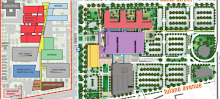
Voila - suddenly, Governor Jindal announces, via admirer Eric Paulsen, that the UMC can be built for $300 million less - without sacrificing "size or features."
After insisting on a $1.2 billion UMC project for years, the Governor pulls a $900 million rabbit out of the hat...and says it's the same thing.
Paulsen's piece can only be described as the work of a mouthpiece. Note how he actively tries to weave in an assertion that there will still be shared services between VA and UMC (which has been deflated in the Times-Picayune) and he obtains exactly zero comment from anyone concerned about or opposed to the UMC as planned.
Rest assured, this isn't over yet.
Showing posts with label Governor Bobby Jindal. Show all posts
Showing posts with label Governor Bobby Jindal. Show all posts
Thursday, September 1, 2011


Sunday, July 10, 2011
The Hubris of Bobby Jindal
"The governor says test pilings will be going in the ground soon and, as far as he is concerned, nothing is going to stop this project."
Reality, Governor, reality. Just remember that.
Remember the over 100 lawsuits underway involving expropriations of parcels in the UMC site made by the State of Louisiana through the LSU Board of Supervisors and the Office of the Governor.
Remember the lack of $400 million in necessary financing to build the first phase of the hospital alone - which makes talk of certain future expansion highly speculative and fanciful. Remember that the failure to pursue HUD mortgage insurance will likely increase the cost of filling that gap given the signals it will send to the private market.
Remember how far behind New Orleans is when it comes to the race to build top-notch biotech infrastructure as you spout more Birmingham-envy - and how the city and state will likely have to spend exponentially more to get into any position to compete at this point.
Remember the unsustainable estimated $100 in annual operating costs in the form of a state subsidy - and the ramp-up costs, and whatever legacy debts need to be taken on.
Remember, too, that in admitting there is still no business plan - and there won't be one for months - you're illuminating just how irresponsible you really are by pushing for demolitions to continue before there's a feasible plan in place.
Reality, Governor, reality. Just remember that.
Remember the over 100 lawsuits underway involving expropriations of parcels in the UMC site made by the State of Louisiana through the LSU Board of Supervisors and the Office of the Governor.
Remember the lack of $400 million in necessary financing to build the first phase of the hospital alone - which makes talk of certain future expansion highly speculative and fanciful. Remember that the failure to pursue HUD mortgage insurance will likely increase the cost of filling that gap given the signals it will send to the private market.
Remember how far behind New Orleans is when it comes to the race to build top-notch biotech infrastructure as you spout more Birmingham-envy - and how the city and state will likely have to spend exponentially more to get into any position to compete at this point.
Remember the unsustainable estimated $100 in annual operating costs in the form of a state subsidy - and the ramp-up costs, and whatever legacy debts need to be taken on.
Remember, too, that in admitting there is still no business plan - and there won't be one for months - you're illuminating just how irresponsible you really are by pushing for demolitions to continue before there's a feasible plan in place.
Monday, June 13, 2011
UMC Situation: Now More Fluid Than Ever
According to this brand new Times-Picayune piece, just published tonight, it's even more unclear what the UMC will look like.
The uncertainty continues. At every step of the way, this project continues to morph, and it seems like most people in Baton Rouge are in denial about just how dicey this thing has become.
This particular facet about considering alternatives but nonetheless bulling forward makes no sense - and continues to convince me that Governor Bobby Jindal is irresponsible, far more irresponsible than I could have imagined in 2008:
Yet the governor also insisted that such an effort, which would involve commissioning another outside consultant, not upset the existing timeline of approving a business and financing plan by late summer and beginning construction in earnest in the succeeding months.
"I don't think this has to slow anything down," Jindal said.
Even with the size, scope and financing still not finalized, the UMC is projected to open in 2015.
That's it - keep expropriating and bulldozing even though we don't have the money and we don't know what the overall plan will actually consist of in the end. This approach is so antithetical to my understanding of conservatism, especially fiscal conservatism, that I don't even know what to say anymore. Jindal is so wrong on this issue that it blocks out just about anything else he does.
And then there's David Vitter's comment in the article, which is quite ironic since he's been pushing for a full and fair consideration of all alternatives:
Jindal, Landrieu and Vitter, meanwhile, said the participants in the meeting agreed that any new hospital would involve new construction. Vitter said he saw an overhaul of the old Charity building as a viable option "earlier in the process." But, he said, "practically, it's fair to say that closing out that possibility is where we are."
So now that the UMC Board will finally consider alternatives... ""It's the governor making clear that (the board's) mandate isn't to be put into any box by LSU or anyone else," Vitter said."...Vitter is going to pre-emptively foreclose the alternative of going back into Charity? Again, I don't understand his logic here. I hope the newly-empowered UMC Board ignores the attempt by the meeting attendees to box them in.
I will speculate, though, that the mayor was likely the most ardent opponent of going back into Charity at today's meeting. All signs indicate he's now fixated on making the existing Charity building into a grandiose new city hall. And he clearly can't stand most of the individuals and groups that support retrofitting Charity because they represent dissent, something that's clearly not welcome in city discussions these days.
The uncertainty continues. At every step of the way, this project continues to morph, and it seems like most people in Baton Rouge are in denial about just how dicey this thing has become.
This particular facet about considering alternatives but nonetheless bulling forward makes no sense - and continues to convince me that Governor Bobby Jindal is irresponsible, far more irresponsible than I could have imagined in 2008:
Yet the governor also insisted that such an effort, which would involve commissioning another outside consultant, not upset the existing timeline of approving a business and financing plan by late summer and beginning construction in earnest in the succeeding months.
"I don't think this has to slow anything down," Jindal said.
Even with the size, scope and financing still not finalized, the UMC is projected to open in 2015.
That's it - keep expropriating and bulldozing even though we don't have the money and we don't know what the overall plan will actually consist of in the end. This approach is so antithetical to my understanding of conservatism, especially fiscal conservatism, that I don't even know what to say anymore. Jindal is so wrong on this issue that it blocks out just about anything else he does.
And then there's David Vitter's comment in the article, which is quite ironic since he's been pushing for a full and fair consideration of all alternatives:
Jindal, Landrieu and Vitter, meanwhile, said the participants in the meeting agreed that any new hospital would involve new construction. Vitter said he saw an overhaul of the old Charity building as a viable option "earlier in the process." But, he said, "practically, it's fair to say that closing out that possibility is where we are."
So now that the UMC Board will finally consider alternatives... ""It's the governor making clear that (the board's) mandate isn't to be put into any box by LSU or anyone else," Vitter said."...Vitter is going to pre-emptively foreclose the alternative of going back into Charity? Again, I don't understand his logic here. I hope the newly-empowered UMC Board ignores the attempt by the meeting attendees to box them in.
I will speculate, though, that the mayor was likely the most ardent opponent of going back into Charity at today's meeting. All signs indicate he's now fixated on making the existing Charity building into a grandiose new city hall. And he clearly can't stand most of the individuals and groups that support retrofitting Charity because they represent dissent, something that's clearly not welcome in city discussions these days.
Vitter/Tucker/Kennedy issue a new press release
Interesting (click to read):

One could read the tea leaves and say that the other "assets" being discussed are...the Charity Hospital complex and former VA hospital complex.
But given the fact that Greenstein and the Mayor were on hand...I'll wait to see what this cryptic release actually means.
Will whatever emerges from this meeting entail rebuilding in the existing Charity shell, as it should? Or will it be entirely focused on new building?
It's amazing that this meeting even happened. I think it's safe to say that nobody out there truly knows what's going to happen next.

One could read the tea leaves and say that the other "assets" being discussed are...the Charity Hospital complex and former VA hospital complex.
But given the fact that Greenstein and the Mayor were on hand...I'll wait to see what this cryptic release actually means.
Will whatever emerges from this meeting entail rebuilding in the existing Charity shell, as it should? Or will it be entirely focused on new building?
It's amazing that this meeting even happened. I think it's safe to say that nobody out there truly knows what's going to happen next.
Friday, June 10, 2011
From the Baton Rouge Business Report
Jindal questions efficiency of Vitter hospital plan
Gov. Bobby Jindal is questioning whether an alternative proposal for a New Orleans public medical center, involving the purchase of two Tulane University hospitals, would be the most efficient way to build a new teaching facility. But Jindal says he's planning to talk to U.S. Sen. David Vitter, House Speaker Jim Tucker and Treasurer John Kennedy to get more details of what they're suggesting before making a decision on whether he thinks it's a workable proposal. The meeting will take place after the legislative session ends on June 23. Vitter, Tucker and Kennedy this week pitched an alternative to the University Medical Center proposal sought by LSU and backed by Jindal. The trio says their idea would cost $800 million, compared to $1.2 billion for the current plan.
Gov. Bobby Jindal is questioning whether an alternative proposal for a New Orleans public medical center, involving the purchase of two Tulane University hospitals, would be the most efficient way to build a new teaching facility. But Jindal says he's planning to talk to U.S. Sen. David Vitter, House Speaker Jim Tucker and Treasurer John Kennedy to get more details of what they're suggesting before making a decision on whether he thinks it's a workable proposal. The meeting will take place after the legislative session ends on June 23. Vitter, Tucker and Kennedy this week pitched an alternative to the University Medical Center proposal sought by LSU and backed by Jindal. The trio says their idea would cost $800 million, compared to $1.2 billion for the current plan.
Thursday, June 9, 2011
BOMBSHELL: Vitter, Kennedy, and Tucker Send Alternative UMC Plan to Jindal
This is big:
Obtained by The Associated Press, the letter proposes buying a share of Tulane University's New Orleans hospital and a Jefferson Parish hospital. Combined with a new facility smaller than the 424-bed hospital proposed by Jindal, the three would make up University Medical Center.
The plan envisions costs well below the $1.2 billion current price tag and would be achieved with dollars already in hand.
Here are the provisions of the suggested alternate plan from the letter:


Obtained by The Associated Press, the letter proposes buying a share of Tulane University's New Orleans hospital and a Jefferson Parish hospital. Combined with a new facility smaller than the 424-bed hospital proposed by Jindal, the three would make up University Medical Center.
The plan envisions costs well below the $1.2 billion current price tag and would be achieved with dollars already in hand.
Here are the provisions of the suggested alternate plan from the letter:


Thursday, May 26, 2011
The Children's Clinic - Demolished

O, the unbridled irony. Demolishing functioning healthcare facilities to build an unfunded monstrosity that takes up massively more land than it needs - sounds sensible, doesn't it?
The push for a fait accompli continues. They'll just keep expropriating and demolishing despite the uncertainty over funding, despite the lack of a business plan, despite the displacement of businesses and residents. This is government at its absolute worst.

Wednesday, March 23, 2011
"the money is in hand": An Open Response to Bobby Jindal's TV Appearance This Morning
No, Governor, the money is not in hand for the proposed University Medical Center in New Orleans. It most definitely is not.
I have so many issues with the Governor's appearance on WWLTV this morning that I don't know where to begin. And that's coming from someone who had high hopes for Bobby Jindal as a smart new kind of thinking conservative at the outset of his term as governor.
Watching the interview and Jindal's eyes-down, driving delivery ("It's absolutely going to happen."), it's almost as if he's simply trying to will the hospital into being, despite all the very real obstacles that remain. That lines up with the state's approach on the ground for much of 2010.
Let's run through a few of the claims made in the tv appearance:
1. Shared services. The whole premise of the "LSU/VA" hospital being co-located for synergy was long ago revealed as bunk. And yet people continue to talk as if the hospitals are a joint venture. Jindal says backroom facilities will still be shared. What does that mean? The host didn't push for any details. I won't believe it until I hear concrete specifics. The two facilities will open at such vastly different times at this rate that I don't know how either one could rely any any critical joint functions, unless the UMC is going to rely on VA services and not the other way around.
2. A number of possible funding sources to make up the financing gap - What exactly are these mysterious sources? In the late fall, it was very clear from consultants at a UMC Board meeting that if HUD did not approve the application from the UMC, the private bond market wouldn't touch the $400 million gap with a ten foot pole. HUD's process is rigorous and does not guarantee funding to applicants by any means - and UMC still hasn't procured mortgage insurance from HUD. In fact, HUD had a number of concerns about the initial UMC application - on major issues like design. The money is not in hand.
3. The vast majority of demolition will be done by April. Perhaps - the state was demolishing movable, recently occupied, historic homes through the fall and winter, getting far out ahead of the financing, as noted by a UMC Board consultant. But not all of it will be demolished by the end of April, that's for sure. The state said it was going to move houses off the site, and that has yet to happen. Really, it's good that the Governor corrected himself after saying that all demolition will be done by April. There are still some major legal issues to deal with - and some big time parties, like OPSB and the Blood Center.
4. They can start construction today - Really? Wouldn't that jeopardize the critical HUD funding? Aren't houses being moved off the site first? What about the fact that streets necessary for completing the project have not yet been revoked by the city? It's important to note that the WWLTV shots of construction that served as part of the story were shots from the VA Footprint - not the UMC Footprint, where things are on hold.
5. They continue to buy properties - And expropriate them. Just remember that. Bobby Jindal has some issues when it comes to respecting property rights. Never once did he mention that the state is using its power of eminent domain to take private property, despite the alternate sites that were and are available. I hope he talks to the small business owners of the Canal Street Guest House, for example, who are being driven out to make way for the project.
Overall, I would have hoped for far more searching follow up questions from Mr. Paulsen. The only positive was the Governor's mention of working with the city to save McDonogh No. 11, which would be good. I'm genuinely glad that the state recognizes the building's importance. But, as I've laid out here earlier, it's premature to talk of moving the building when the money is not in hand. And when it may cost less to change the design and incorporate the building...than to move it.
I have so many issues with the Governor's appearance on WWLTV this morning that I don't know where to begin. And that's coming from someone who had high hopes for Bobby Jindal as a smart new kind of thinking conservative at the outset of his term as governor.
Watching the interview and Jindal's eyes-down, driving delivery ("It's absolutely going to happen."), it's almost as if he's simply trying to will the hospital into being, despite all the very real obstacles that remain. That lines up with the state's approach on the ground for much of 2010.
Let's run through a few of the claims made in the tv appearance:
1. Shared services. The whole premise of the "LSU/VA" hospital being co-located for synergy was long ago revealed as bunk. And yet people continue to talk as if the hospitals are a joint venture. Jindal says backroom facilities will still be shared. What does that mean? The host didn't push for any details. I won't believe it until I hear concrete specifics. The two facilities will open at such vastly different times at this rate that I don't know how either one could rely any any critical joint functions, unless the UMC is going to rely on VA services and not the other way around.
2. A number of possible funding sources to make up the financing gap - What exactly are these mysterious sources? In the late fall, it was very clear from consultants at a UMC Board meeting that if HUD did not approve the application from the UMC, the private bond market wouldn't touch the $400 million gap with a ten foot pole. HUD's process is rigorous and does not guarantee funding to applicants by any means - and UMC still hasn't procured mortgage insurance from HUD. In fact, HUD had a number of concerns about the initial UMC application - on major issues like design. The money is not in hand.
3. The vast majority of demolition will be done by April. Perhaps - the state was demolishing movable, recently occupied, historic homes through the fall and winter, getting far out ahead of the financing, as noted by a UMC Board consultant. But not all of it will be demolished by the end of April, that's for sure. The state said it was going to move houses off the site, and that has yet to happen. Really, it's good that the Governor corrected himself after saying that all demolition will be done by April. There are still some major legal issues to deal with - and some big time parties, like OPSB and the Blood Center.
4. They can start construction today - Really? Wouldn't that jeopardize the critical HUD funding? Aren't houses being moved off the site first? What about the fact that streets necessary for completing the project have not yet been revoked by the city? It's important to note that the WWLTV shots of construction that served as part of the story were shots from the VA Footprint - not the UMC Footprint, where things are on hold.
5. They continue to buy properties - And expropriate them. Just remember that. Bobby Jindal has some issues when it comes to respecting property rights. Never once did he mention that the state is using its power of eminent domain to take private property, despite the alternate sites that were and are available. I hope he talks to the small business owners of the Canal Street Guest House, for example, who are being driven out to make way for the project.
Overall, I would have hoped for far more searching follow up questions from Mr. Paulsen. The only positive was the Governor's mention of working with the city to save McDonogh No. 11, which would be good. I'm genuinely glad that the state recognizes the building's importance. But, as I've laid out here earlier, it's premature to talk of moving the building when the money is not in hand. And when it may cost less to change the design and incorporate the building...than to move it.
Wednesday, December 8, 2010
"There have been some very big concerns about the state moving ahead with the new teaching hospital after Mayor Mitch Landrieu criticized some of the specifics of the state’s plan for the proposed $1 billion design."
Right - and it's good to see the local television media questioning Governor Bobby Jindal about just how he plans to pull off the project given all of those concerns.
And there were concerns even before Mayor Mitch Landrieu questioned the UMC design for the LSU Footprint. Many of them remain. And they extend far beyond the design alone. They extend beyond the conveyance computer crisis.
For one, the size of the site itself is still excessive. The design changes may alter the chess pieces that sit on various spaces on the board, but the board size itself remains in place. The UMC Footprint boundaries have not been altered. Rehabilitating the existing Charity Hospital building is not back on the table - or, really, finally on the table for the first time since Katrina - from what I know.
Additionally, the question of funding remains. The UMC Board likes to talk as if the funding will fall in place - but it will take months to determine whether HUD will be able to back the remaining financing necessary to actually build the proposed hospital.
Beyond that, the continued demolition of historic structures that contribute to a national historic district continues. There is no concrete house moving plan for the UMC Footprint, unlike on the VA side of the project.
There are also people who continue to reside in the UMC Footprint - a fact that seems lost on Governor Jindal and others. There are also numerous working businesses in the site, some of them multi-million dollar enterprises - a security company, a guest house on the streetcar line, a uniform shop, an electronics firm, an independent auto parts store, and auto mechanic shops. The massive Blood Center will also have to relocate, as well as a charter school, Priestley, where students will be dislocated and moved to modular units halfway through the school year (over the holidays).
In fact, I wonder how many conservatives and Republicans across the nation know that Governor Bobby Jindal is backing an urban renewal-style government project that entails widespread use of eminent domain (expropriation here in Louisiana). I wonder if property rights advocates know that Jindal is backing a project that is now contemplating retail - private enterprise - as a direct beneficiary of the land acquisition in the UMC Footprint.
I bet they'd find that interesting. I know I do.
And there were concerns even before Mayor Mitch Landrieu questioned the UMC design for the LSU Footprint. Many of them remain. And they extend far beyond the design alone. They extend beyond the conveyance computer crisis.
For one, the size of the site itself is still excessive. The design changes may alter the chess pieces that sit on various spaces on the board, but the board size itself remains in place. The UMC Footprint boundaries have not been altered. Rehabilitating the existing Charity Hospital building is not back on the table - or, really, finally on the table for the first time since Katrina - from what I know.
Additionally, the question of funding remains. The UMC Board likes to talk as if the funding will fall in place - but it will take months to determine whether HUD will be able to back the remaining financing necessary to actually build the proposed hospital.
Beyond that, the continued demolition of historic structures that contribute to a national historic district continues. There is no concrete house moving plan for the UMC Footprint, unlike on the VA side of the project.
There are also people who continue to reside in the UMC Footprint - a fact that seems lost on Governor Jindal and others. There are also numerous working businesses in the site, some of them multi-million dollar enterprises - a security company, a guest house on the streetcar line, a uniform shop, an electronics firm, an independent auto parts store, and auto mechanic shops. The massive Blood Center will also have to relocate, as well as a charter school, Priestley, where students will be dislocated and moved to modular units halfway through the school year (over the holidays).
In fact, I wonder how many conservatives and Republicans across the nation know that Governor Bobby Jindal is backing an urban renewal-style government project that entails widespread use of eminent domain (expropriation here in Louisiana). I wonder if property rights advocates know that Jindal is backing a project that is now contemplating retail - private enterprise - as a direct beneficiary of the land acquisition in the UMC Footprint.
I bet they'd find that interesting. I know I do.
Subscribe to:
Posts (Atom)