Pared down by the editors, here's how it appeared in today's paper:
April 13, 2010, 1:11AM
I moved to New Orleans in the summer of 2007, in large part because I find this place unique. A significant part of that uniqueness stems from the city's distinctive architectural jumble that has emerged after nearly three centuries.
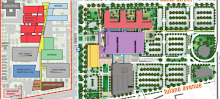
I object to the plans to demolish a sizable swath of the city's architectural heritage in lower Mid-City to make way for the proposed LSU and VA hospitals. While the return of medical services is an admirable goal, the plans are an assault on what sets New Orleans apart. The use of expropriation to seize properties is also disconcerting.
In the past nine months, I've spent a good deal of time "inside the footprint" of the proposed hospitals. I've seen every single camelback, shotgun, Creole cottage, raised basement home and hybrid. I've talked with many of the residents who returned post-Katrina, only to face a moratorium on repairs and ongoing uncertainty about demolition.
The mitigation factors U.S. District Judge Eldon Fallon raised, which The Times-Picayune cited in its editorial, are laughable. Taking photos, salvaging a few architectural elements and moving eight to 12 homes still permits destruction of hundreds of historic properties.
Destruction of the neighborhood lakeside of Galvez Street is completely inappropriate.
As seen after the razing of local federal housing complexes, areas cleared optimistically for major development using expropriation sometimes end up sitting vacant. It would make more sense, as has been suggested all along, to locate the VA Hospital riverside of Galvez Street and reopen the LSU facility within the existing Charity Hospital building.
I'm not suggesting New Orleans put itself in a glass case, preserved for all time. But we need to recognize when changes are too extreme. When a proposed change stands to alter a fundamental characteristic of the city, it needs to include recognition of its harmful impacts and a meaningful effort to mitigate them. That's never been present in the LSU/VA Hospital push. Instead, there's been a consistent attempt to get away with as little effort at historic preservation as permitted by law.
Tuesday, April 13, 2010


Thursday, April 8, 2010
"Apparently, the salvage company is starting selective recoupment next week..."
That's what I've heard.
I'm very curious as to how the salvage company will proceed as it attempts to procure historic elements from structures inside the VA footprint. People continue to live in the homes in that footprint.
I'm very curious as to how the salvage company will proceed as it attempts to procure historic elements from structures inside the VA footprint. People continue to live in the homes in that footprint.

Tuesday, April 6, 2010

Monday, April 5, 2010
Parking Lots
Humid Beings A CityBusiness piece, reproduced at Humid Beings without sufficient context, focuses in on the many acres of surface parking lot that will come with the current design for the proposed hospitals in Lower Mid-City.
Sunday, April 4, 2010
My Response to the Times-Picayune's Editorial in Favor of Destroying Lower Mid-City
Here's my point-by-point response to the Times-Picayune editorial board's piece today praising a ruling in favor of building hospitals in Lower Mid-City:
Rebuilding of streets, police stations and other public spaces is finally in full gear almost five years after Hurricane Katrina and the levee breaches. But one of the most vital construction projects for the city's recovery has remained on hold.
That's odd. If getting the VA and Charity hospitals back on line was a vital construction project, you think the people in charge, to start, would have rebuilt in the existing Charity Hospital building - something that was feasible structurally, would have cost less money than the Lower Mid-City option, and would have been completed more rapidly.
It's also interesting that the paper's desire for rebuilding and renewal didn't extend to those who live in or lived in Lower Mid-City. A City Council moratorium barred residents and owners inside the footprint from even effecting simple repairs to their properties for months.
It may at last get back on track, though. A federal judge's ruling last week rejecting preservationists' arguments against two proposed hospitals in Mid-City is a significant victory for New Orleans and the rest of the metro area.
So, a significant victory includes destroyed a swath of homes built of first growth cypress with distinctive, endemic New Orleans architectural characteristics that are easily movable? Victory is forcing people out of their homes after they returned following Katrina and restarted their lives? Victory is further reducing the city's already shaky tax base? Victory is employing state expropriation (eminent domain) against private property owners when alternative sites are available? Victory is thrusting a peninsula of development appropriate to the CBD north of South Galvez Street into what is a National Register Historic District and what is clearly neighborhood?
The decision, by U.S. District Judge Eldon Fallon, removes an obstacle to construction of a new 200-bed Veterans Affairs hospital and a nearby 424-bed state teaching hospital near downtown New Orleans.
If LSU can even pay for its portion, as the folks at Save Charity Hospital have pointed out repeatedly. And Judge Fallon forgot to mention just how much of the roughly 70 acres of land will be used for surface level parking lots wholly inappropriate to New Orleans. Getting the hospitals back on line is an admirable and worthy goal. But the good that will come from the endeavors is not the only factor worth weighing in the balance when arriving at a way forward. Throughout the process, the absurdly inflexible insistence on the Lower Mid-City site has been baffling.
The long-planned hospitals are urgently needed to treat veterans, as well as the sick and the indigent, and to train new doctors and health care professionals. Just as important, the facilities are expected to anchor a biomedical district that could attract thousands of jobs and become a vital economic engine for our region.
The key word there is "could." Destroying all of the projects in New Orleans and replacing them with lesser quality buildings could improve New Orleans. Or, as we now see, they may never be replaced because times change and funding realities can worsen. If you want to see the devastating effects of "could" in a situation similar to the one in Lower Mid-City, see how New London, Connecticut looks after it used eminent domain to eliminate homeowners like Susette Kelo for development by Pfizer...that never materialized.
Preservationist groups have said that instead of building a new teaching hospital, the state should rehabilitate the old Charity Hospital building. The ruling this week came on a lawsuit filed by one of those groups, the National Trust for Historic Preservation, which argued that the fast-tracked planning process for the new hospitals violated the National Environmental Protection Act. That law requires a complete vetting of construction projects financed with federal money but gives agencies some leeway on how they set up the planning process.
Building in Lower Mid-City also leaves the existing Charity and the VA campuses in the CBD vacant...even more vacancies in an already drafty downtown.
Judge Fallon concluded that months of planning meetings and the documents produced in that process satisfied the federal requirements. He noted that the government satisfied requirements to consider various sites early in the process and that it evaluated the project's environmental impact. Significantly, the judge noted that "had the agencies been required to wait for all relevant information, the (preliminary environmental assessment) would not have begun until recently, thus further delaying the return of medical services to the New Orleans area."
The federal requirements, the laws in place related to historic preservation-based objections to development, have no teeth. They are blatantly, by design, toothless when it comes to stopping projects, especially those initiated by unelected federal agencies. There is process, yes, but meaningless process. Fallon's concern reveals the Catch-22 that often serves to defeat attempts at preservation: the judges note that construction couldn't get underway if all parties waited for the outcome of the full, unsegmented studies. But then, once construction has progressed far enough, it would be inconvenient to stop the project. Effectively, the judge chooses development, normatively, as his preferred outcome.
Considering that more than four years have passed since Katrina hit and the floodwalls failed, additional delays would have been a harsh blow to our region.
And again, if the delay in providing services was such a hassle...why didn't the powers that be go with the old Charity renovation option, as State Treasurer Kennedy suggested?
The necessity of these hospitals does not negate their disruptive impact on residents who live in the area where they will be built. That's especially painful for property owners who rebuilt after Katrina and are now having to relocate. But the broader public interest in developing a new medical district clearly justifies the construction of the hospitals. As they acquire property for the project, government officials need to make sure residents are treated fairly and are adequately compensated. In his ruling, Judge Fallon said the government made adequate plans to mitigate effects on residents, businesses and historic structures -- and that's important.
The broader public interest? Public interest, perhaps. But since expropriation (eminent domain) is in play, the U.S. Constitution is in play, specifically the 5th Amendment: "nor shall private property be taken for public use, without just compensation." Public use got stretched to public purpose, and then the Kelo case weakened the protection even more, by essentially permitting a government entity to engage in a taking for the benefit of a private entity.
While the state and federal entities pushing the hospital plans appear to be public entities, the Constitutional provision on takings highlights just how fundamentally takings can harm individuals - it shows why expropriation should not be used if there are alternatives available (and if it's unclear that the fiscal picture will even permit the proposed project to be built). Government shouldn't use a bunker buster bomb if negotiation will do the trick, so to speak - even if a few holdouts raise the price, let them. Or build in a smaller footprint to begin with! Build vertically instead of horizontally.
"These" hospitals? No, just hospitals. The proposed hospitals in these particular locations are not the crucial aspect, it's just hospitals of some sort - veterans and indigents would get care just as well if the hospitals were located elsewhere.
I also question whether the compensation to be provided to those whose property is seized (like the owners of the Pan-Am building that was already seized via expropriation even as price negotiations were underway) will even be just.
And finally, adequate plans to mitigate harsh effects on residents, businesses, and historic properties? I'm sorry, that's rather ridiculous, especially when it comes to historic properties. The mitigation measures that Fallon outlines are laughable: taking digital photos of the properties to be demolished and providing a pittance of cash to move homes (only eight homeowners even considered it due to the conditions and there was barely enough allotted to move 20 homes out of over 100 historic structures in the VA footprint alone). Destroying over hundreds of properties eligible for listing on the National Register, many of them quintessentially New Orleanian is a travesty that the city will likely look back on with sorrow some day when it realizes the joint hospitals project was in part yet another pie in the sky panacea. Lower Mid-City is a motley jumble of architectural styles and densities - the kind of thing residential developers try to recreate in new urbanism developments. It exudes the one-of-a-kind feel that makes a person know he or she is in New Orleans, not somewhere else.
The Veterans Administration, which committed to building a new hospital in New Orleans shortly after the storm, welcomed the court's ruling. Many New Orleanians are thankful for the federal government's resolve in that project.
Yes, the VA. What if the VA builds at its site...only to have LSU fail to procure sufficient funding for its site, which is closer to the CBD, the essential part of the plan that would make the VA hospital part of a peninsula of inappropriateness out into Mid-City instead of an island. What if only an island comes of this? It's great that the VA plans to continue to call New Orleans home. But the lure of economic lucre - and jobs for private companies, a key reason that many government leaders support the plan (not really a public purpose for takings analysis, it seems) - should, again, not be the only consideration. And there has been little consideration throughout this process for keeping a valuable, if intangible, part of New Orleans intact - a part of its imperfect, unique, indomitable soul.
The state also has been working toward the new teaching hospital, and that effort has overcome several obstacles recently. An impasse between Louisiana State University and Tulane University over governance of the new facility was resolved in August. In January, a federal arbitration panel awarded $474 million for storm-related damage to Charity Hospital. The money will go toward construction of the new hospital and will greatly reduce what Louisiana will need to borrow to complete the estimated $1.2 billion project.
One more time...if this whole push was truly about getting a hospital re-opened to get care to indigents and veterans, why not use the arbitration award the moment it came down to refurbish the existing Charity Hospital? The Ahab-like obsession with staking out an incongruent white whale in Lower Mid-City smothered all other efforts at compromise.
Now Judge Fallon's ruling puts New Orleans "one step closer to re-establishing a system of first-class health care for all its citizens," as Mayor Ray Nagin said.
C. Ray Nagin, font of all wisdom. Quoting him, a public official with "worse than Bush" poll numbers, apparently lends an extra note of credence and gravity to the op-ed.
That's a major -- and long-awaited -- development.
It is a long-awaited development. One that could have come sooner had thoughtful minds prevailed. One that can still happen without destroying Lower Mid-City and using the weight of government to force people from their homes.
Rebuilding of streets, police stations and other public spaces is finally in full gear almost five years after Hurricane Katrina and the levee breaches. But one of the most vital construction projects for the city's recovery has remained on hold.
That's odd. If getting the VA and Charity hospitals back on line was a vital construction project, you think the people in charge, to start, would have rebuilt in the existing Charity Hospital building - something that was feasible structurally, would have cost less money than the Lower Mid-City option, and would have been completed more rapidly.
It's also interesting that the paper's desire for rebuilding and renewal didn't extend to those who live in or lived in Lower Mid-City. A City Council moratorium barred residents and owners inside the footprint from even effecting simple repairs to their properties for months.
It may at last get back on track, though. A federal judge's ruling last week rejecting preservationists' arguments against two proposed hospitals in Mid-City is a significant victory for New Orleans and the rest of the metro area.
So, a significant victory includes destroyed a swath of homes built of first growth cypress with distinctive, endemic New Orleans architectural characteristics that are easily movable? Victory is forcing people out of their homes after they returned following Katrina and restarted their lives? Victory is further reducing the city's already shaky tax base? Victory is employing state expropriation (eminent domain) against private property owners when alternative sites are available? Victory is thrusting a peninsula of development appropriate to the CBD north of South Galvez Street into what is a National Register Historic District and what is clearly neighborhood?
The decision, by U.S. District Judge Eldon Fallon, removes an obstacle to construction of a new 200-bed Veterans Affairs hospital and a nearby 424-bed state teaching hospital near downtown New Orleans.
If LSU can even pay for its portion, as the folks at Save Charity Hospital have pointed out repeatedly. And Judge Fallon forgot to mention just how much of the roughly 70 acres of land will be used for surface level parking lots wholly inappropriate to New Orleans. Getting the hospitals back on line is an admirable and worthy goal. But the good that will come from the endeavors is not the only factor worth weighing in the balance when arriving at a way forward. Throughout the process, the absurdly inflexible insistence on the Lower Mid-City site has been baffling.
The long-planned hospitals are urgently needed to treat veterans, as well as the sick and the indigent, and to train new doctors and health care professionals. Just as important, the facilities are expected to anchor a biomedical district that could attract thousands of jobs and become a vital economic engine for our region.
The key word there is "could." Destroying all of the projects in New Orleans and replacing them with lesser quality buildings could improve New Orleans. Or, as we now see, they may never be replaced because times change and funding realities can worsen. If you want to see the devastating effects of "could" in a situation similar to the one in Lower Mid-City, see how New London, Connecticut looks after it used eminent domain to eliminate homeowners like Susette Kelo for development by Pfizer...that never materialized.
Preservationist groups have said that instead of building a new teaching hospital, the state should rehabilitate the old Charity Hospital building. The ruling this week came on a lawsuit filed by one of those groups, the National Trust for Historic Preservation, which argued that the fast-tracked planning process for the new hospitals violated the National Environmental Protection Act. That law requires a complete vetting of construction projects financed with federal money but gives agencies some leeway on how they set up the planning process.
Building in Lower Mid-City also leaves the existing Charity and the VA campuses in the CBD vacant...even more vacancies in an already drafty downtown.
Judge Fallon concluded that months of planning meetings and the documents produced in that process satisfied the federal requirements. He noted that the government satisfied requirements to consider various sites early in the process and that it evaluated the project's environmental impact. Significantly, the judge noted that "had the agencies been required to wait for all relevant information, the (preliminary environmental assessment) would not have begun until recently, thus further delaying the return of medical services to the New Orleans area."
The federal requirements, the laws in place related to historic preservation-based objections to development, have no teeth. They are blatantly, by design, toothless when it comes to stopping projects, especially those initiated by unelected federal agencies. There is process, yes, but meaningless process. Fallon's concern reveals the Catch-22 that often serves to defeat attempts at preservation: the judges note that construction couldn't get underway if all parties waited for the outcome of the full, unsegmented studies. But then, once construction has progressed far enough, it would be inconvenient to stop the project. Effectively, the judge chooses development, normatively, as his preferred outcome.
Considering that more than four years have passed since Katrina hit and the floodwalls failed, additional delays would have been a harsh blow to our region.
And again, if the delay in providing services was such a hassle...why didn't the powers that be go with the old Charity renovation option, as State Treasurer Kennedy suggested?
The necessity of these hospitals does not negate their disruptive impact on residents who live in the area where they will be built. That's especially painful for property owners who rebuilt after Katrina and are now having to relocate. But the broader public interest in developing a new medical district clearly justifies the construction of the hospitals. As they acquire property for the project, government officials need to make sure residents are treated fairly and are adequately compensated. In his ruling, Judge Fallon said the government made adequate plans to mitigate effects on residents, businesses and historic structures -- and that's important.
The broader public interest? Public interest, perhaps. But since expropriation (eminent domain) is in play, the U.S. Constitution is in play, specifically the 5th Amendment: "nor shall private property be taken for public use, without just compensation." Public use got stretched to public purpose, and then the Kelo case weakened the protection even more, by essentially permitting a government entity to engage in a taking for the benefit of a private entity.
While the state and federal entities pushing the hospital plans appear to be public entities, the Constitutional provision on takings highlights just how fundamentally takings can harm individuals - it shows why expropriation should not be used if there are alternatives available (and if it's unclear that the fiscal picture will even permit the proposed project to be built). Government shouldn't use a bunker buster bomb if negotiation will do the trick, so to speak - even if a few holdouts raise the price, let them. Or build in a smaller footprint to begin with! Build vertically instead of horizontally.
"These" hospitals? No, just hospitals. The proposed hospitals in these particular locations are not the crucial aspect, it's just hospitals of some sort - veterans and indigents would get care just as well if the hospitals were located elsewhere.
I also question whether the compensation to be provided to those whose property is seized (like the owners of the Pan-Am building that was already seized via expropriation even as price negotiations were underway) will even be just.
And finally, adequate plans to mitigate harsh effects on residents, businesses, and historic properties? I'm sorry, that's rather ridiculous, especially when it comes to historic properties. The mitigation measures that Fallon outlines are laughable: taking digital photos of the properties to be demolished and providing a pittance of cash to move homes (only eight homeowners even considered it due to the conditions and there was barely enough allotted to move 20 homes out of over 100 historic structures in the VA footprint alone). Destroying over hundreds of properties eligible for listing on the National Register, many of them quintessentially New Orleanian is a travesty that the city will likely look back on with sorrow some day when it realizes the joint hospitals project was in part yet another pie in the sky panacea. Lower Mid-City is a motley jumble of architectural styles and densities - the kind of thing residential developers try to recreate in new urbanism developments. It exudes the one-of-a-kind feel that makes a person know he or she is in New Orleans, not somewhere else.
The Veterans Administration, which committed to building a new hospital in New Orleans shortly after the storm, welcomed the court's ruling. Many New Orleanians are thankful for the federal government's resolve in that project.
Yes, the VA. What if the VA builds at its site...only to have LSU fail to procure sufficient funding for its site, which is closer to the CBD, the essential part of the plan that would make the VA hospital part of a peninsula of inappropriateness out into Mid-City instead of an island. What if only an island comes of this? It's great that the VA plans to continue to call New Orleans home. But the lure of economic lucre - and jobs for private companies, a key reason that many government leaders support the plan (not really a public purpose for takings analysis, it seems) - should, again, not be the only consideration. And there has been little consideration throughout this process for keeping a valuable, if intangible, part of New Orleans intact - a part of its imperfect, unique, indomitable soul.
The state also has been working toward the new teaching hospital, and that effort has overcome several obstacles recently. An impasse between Louisiana State University and Tulane University over governance of the new facility was resolved in August. In January, a federal arbitration panel awarded $474 million for storm-related damage to Charity Hospital. The money will go toward construction of the new hospital and will greatly reduce what Louisiana will need to borrow to complete the estimated $1.2 billion project.
One more time...if this whole push was truly about getting a hospital re-opened to get care to indigents and veterans, why not use the arbitration award the moment it came down to refurbish the existing Charity Hospital? The Ahab-like obsession with staking out an incongruent white whale in Lower Mid-City smothered all other efforts at compromise.
Now Judge Fallon's ruling puts New Orleans "one step closer to re-establishing a system of first-class health care for all its citizens," as Mayor Ray Nagin said.
C. Ray Nagin, font of all wisdom. Quoting him, a public official with "worse than Bush" poll numbers, apparently lends an extra note of credence and gravity to the op-ed.
That's a major -- and long-awaited -- development.
It is a long-awaited development. One that could have come sooner had thoughtful minds prevailed. One that can still happen without destroying Lower Mid-City and using the weight of government to force people from their homes.
Imminent

In the photo above, the house at the far left, 325 S. Tonti, and the house at the far right, 319 S. Tonti, are both in the pipeline for demolition in the near future - as early as April 8 for at least one of them.
While 325 S. Tonti is interesting architecturally and likely easily restorable, 319 S. Tonti appears to be presently occupied (or recently occupied), making it all the more disheartening that a perfectly usable property with character is going to be destroyed. Further, both properties are relatively small and more easily movable than some in the footprint.
The hole out front in the street appeared on Thursday this past week.
One of the reasons I decided to move to New Orleans was the place's incomparable presence as a city. A major component of that uniqueness is the crazy, interesting, diverse architectural environment. It's hard for me to understand why the VA site has ever been in play - it pushes a peninsula of parking lot-clad development out far beyond the CBD into what is very clearly a neighborhood area with historic homes, an area that was designated a National Register Historic District, an area that didn't recover from Katrina as well as some areas in part because the City Council placed a moratorium on the activities necessary to revitalization.
Saturday, April 3, 2010

Friday, April 2, 2010
Demolitions Loom in the VA Footprint
At this point, I'm aware of 5 letters of notice sent out to local state legislators regarding requests to demolish 5 different properties inside the VA Hospital footprint. Permission to demolish, it seems, cannot be granted until 30 days after such letters are sent out per Louisiana law. Three of the letters were sent on March 8, 2010, and two were sent on March 16, 2010.
Four of the properties involved are contributing historic properties to the Mid-City National Register Historic District. One is not on that list. Two of the contributing historic properties slated for demolition are currently being lived in, to my knowledge, and the houses, small shotguns, are in great shape.
Essentially, it's possible that demolitions in the VA footprint could begin in the upcoming week - the machinery is certainly in motion.
Four of the properties involved are contributing historic properties to the Mid-City National Register Historic District. One is not on that list. Two of the contributing historic properties slated for demolition are currently being lived in, to my knowledge, and the houses, small shotguns, are in great shape.
Essentially, it's possible that demolitions in the VA footprint could begin in the upcoming week - the machinery is certainly in motion.

Thursday, April 1, 2010

Wednesday, March 31, 2010
UPDATE
Judge Fallon, a federal judge here in New Orleans, just denied the National Trust for Historic Preservation's motion for summary judgment, which would have halted property acquisition and demolition in the VA footprint.
ADDED: Reading through the order, Fallon not only denied the National Trust summary judgment...he also granted summary judgment to the governmental entities that comprise the defendants in the case on the grounds they sought.
ADDED: Reading through the order, Fallon not only denied the National Trust summary judgment...he also granted summary judgment to the governmental entities that comprise the defendants in the case on the grounds they sought.
Ready for Demolition?

From what I've been hearing, this little shotgun at 325 S. Tonti is slated for demolition in the near future. In addition to the aesthetic value of some of its trim, the bulk of the building seems to be in stable structural shape.

Tuesday, March 30, 2010
Injunction Sought
The National Trust for Historic Preservation has requested an injunction from a federal judge to stop land acquisition and destruction of historic properties in the VA footprint.
An Interesting Specimen

Lately, I've noticed the unusual nature of this camelback on Cleveland. While most of it is classic camelback, the front porch either was - or was later modified to have - a distinct roof that runs perpendicular to the other roof lines on the house. It's sort of a "screened camelback" that, more than other iterations of the style, "hides its hump," so to speak.
Buzzing
Following the first use of expropriation in the footprint, the effort to slow, blunt, and otherwise stop the destruction of the structures and neighborhood in the VA footprint is in high gear this week.


Tuesday, March 16, 2010
And So It Begins
LSU strikes inside the footprint, using expropriation to take the former City Hall Annex building at Canal and Rocheblave:
Strangely, the piece of property seized is in the VA hospital footprint - that lends some credence to the argument of the former owners that LSU is acting impermissibly under state law as an agent for the city in making a transfer to effectuate the city's MOU with the VA for site preparation.
Since early 2006, the massive City Hall Annex building has been owned by 2400 Canal LLC, a partnership led by lawyers Robert Evans and Cesar Burgos. But on Thursday, Louisiana State University filed quick-take papers and deposited $3.7 million in Orleans Parish Civil District Court, immediately transferring title to the state under its expropriation law.
The land will eventually be turned over to the U.S. Department of Veterans Affairs for a new VA Hospital, proposed to take shape alongside a new LSU hospital complex, said Kent Parsons, the lawyer handling expropriations for the state.
Strangely, the piece of property seized is in the VA hospital footprint - that lends some credence to the argument of the former owners that LSU is acting impermissibly under state law as an agent for the city in making a transfer to effectuate the city's MOU with the VA for site preparation.
Wednesday, February 24, 2010
Street Closures Approved
Yesterday, the City Planning Commission approved the eventual closure of a number of the streets inside the planned VA footprint. The Times-Pic article on the subject does not say when the closures would actually begin - seemingly a crucial fact.
The City Council vote on the matter is the next step.
The City Council vote on the matter is the next step.
Monday, February 22, 2010
Tomorrow, February 23
The New Orleans City Planning Commission is slated to consider, at the least, the closure of cross-streets inside the VA footprint:
The meeting is scheduled for 1:30 p.m. at City Hall in the Council Chambers.
In question are the cross streets bounded by South Rocheblave Street, Tulane Avenue, South Galvez Street and Canal Street. Thoroughfares on the state site -- across Galvez to South Claiborne Avenue, also bounded by Tulane and Canal -- are not on the agenda.
The meeting is scheduled for 1:30 p.m. at City Hall in the Council Chambers.
Sunday, February 21, 2010
Interesting
I noticed a hyperlinked ad atop the Nola.com homepage that linked to Canal Housing, a company that owns and rents a number of small properties inside the footprint, all apparently restored after Katrina.
Strangely, the company, in advertising for its various properties, does not once mention the fact that some of its properties will likely face expropriation and destruction within the next six months. While I feel sorry for the company, it seems unfair to fail to give prospective residents notice.
Strangely, the company, in advertising for its various properties, does not once mention the fact that some of its properties will likely face expropriation and destruction within the next six months. While I feel sorry for the company, it seems unfair to fail to give prospective residents notice.
Friday, February 12, 2010

The Federal Suit
Here's the rundown on the footprint-related suit in federal court here in New Orleans:
I wasn't able to attend the summary judgment hearing on Tuesday, but I'm interested to see how Judge Fallon ultimately rules on the motions.
A lawsuit filed by the National Trust for Historic Preservation claims that government parties violated the National Environmental Policy Act when they fast-tracked the required pre-construction review to bypass a comprehensive "environmental impact statement." Among other counterarguments, Veterans Affairs and the Federal Emergency Management Agency say they are due the court's deference when considering the methodology used in satisfying the rules that govern all construction projects financed with federal tax money.
I wasn't able to attend the summary judgment hearing on Tuesday, but I'm interested to see how Judge Fallon ultimately rules on the motions.
Sunday, February 7, 2010

Thursday, February 4, 2010


Monday, February 1, 2010
Metamorphosis
Remember this one?
Well, here's the new and improved version, which must have emerged in the past month or so, part of the strange mini-trend of rehabilitating buildings Inside the Footprint on the eve of destruction:

It's really a bittersweet phenomenon - the buildings, like this one, look amazing after a bit of paint and demonstrate the potential for the area. Ironically, though, as we've heard, some owners are only doing the upgrades in order to get a better price from the state in the buyout.
Well, here's the new and improved version, which must have emerged in the past month or so, part of the strange mini-trend of rehabilitating buildings Inside the Footprint on the eve of destruction:

It's really a bittersweet phenomenon - the buildings, like this one, look amazing after a bit of paint and demonstrate the potential for the area. Ironically, though, as we've heard, some owners are only doing the upgrades in order to get a better price from the state in the buyout.
Subscribe to:
Posts (Atom)