Tuesday, May 31, 2011

UMC Street Revocation - On Thursday's City Council Agenda

The meeting is slated for 10 a.m. in Council Chambers, but it's unclear when the council will get to this item:

39. CAL. NO. 28,457 - BY: COUNCILMEMBER HEAD (BY REQUEST)

Brief:

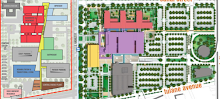
An Ordinance To authorize the revocation of dedication and transfer to the State of Louisiana of those portions of Cleveland Avenue between Squares 521 and 522; Cleveland Avenue between Squares 469 and 470; Cleveland Avenue between Squares 467 and 468; Cleveland Avenue between Squares 436 and 437; Palmyra Street between Squares 520 and 521; Palmyra Street between Squares 470 and 471; Palmyra Street between Squares 466 and 467; Palmyra Street between Squares 437 and 438; Palmyra Street between Squares 433 and 434; Banks Street between Squares 519 and 520; Banks Street between Squares 471 and Tulane Ave.; South Johnson Street between Squares 519 and Tulane Ave.; South Johnson Street between Squares 471 and 520; South Johnson Street between Squares 470 and 521; South Johnson Street between Squares 469 and 522; South Prieur Street between Squares 466 and 471; South Prieur Street between Squares 467 and 470; South Prieur Street between Squares 468 and 469; South Roman Street between Squares 438 and 466; South Roman Street between Squares 437 and 467; South Roman Street between Squares 436 and 468; South Derbigny Street between Squares 433 and 438; South Derbigny Street between Squares 434 and 437, and all the intersections included within said area; being generally bounded by Canal Street on the northeast side, South Galvez Street on the northwest side, Tulane Avenue on the southwest side and Claiborne Avenue on the southeast side, together with all improvements and appurtenances thereon, all in the First Municipal District in the City of New Orleans, and otherwise to provide with respect thereto.

Monday, May 30, 2011

Echoes of Robert Moses...in the UMC Footprint

"Before construction was to start, the state of New York hired an engineering firm, Day and Zimmerman, to study the feasibility of adding a mass transit line along the road's right of way.  Moses was so alarmed at the prospect of trains cluttering up his highway that he ordered construction to start before the report could be issued, borrowing $20 million from the Triborough Authority's slush fund to do so.  By the time Day and Zimmerman issued their report - which, of course, recommended the addition of a rail line - the subject was moot because to incorporate it would require the demolition of the work already completed."


"Moses also learned the trick of misleading the state legislature to get his projects underway.  He called it "stake driving."  He would grossly underestimate the cost of a project to get it underway fast.  Then he'd blackmail politicians into funding the rest, saying that their ignorance about the real cost of the project made them derelict in their duty and unfit for office."

*Both excerpts from James Kunstler's "The Geography of Nowhere"

We're seeing a loosely analogous "inevitability" situation play out - demolish away until there's no other option than to proceed.  But we'll see if the politicians in Baton Rouge ultimately play along with that set up.

Friday, May 27, 2011

Jones: "we will be dealing with expropriation lawsuits for years"

Well, there you have it.

Yet another benefit of pushing a hospitals into a heavily populated historic district.

The Lens tweeted last night's Special Committee on Hurricane Recovery held in City Council Chambers.  The state's Office of Facilities and Planning Control presented on the UMC - Jerry Jones flanked by Jim McNamara of BioDistrict New Orleans and Fred Cerise of LSU.

There were some other great quotes.  Like "there have been several business plans."

Kudos to City Council Member Kristin Gisleson Palmer for bringing a bit of skepticism to the table - the Times-Picayune certainly didn't.

Nobody has asked who the "community leaders" were that the Times-Pic referred to...a trio of UMC cheerleaders, including former Mayor Sidney Barthelemy, saying they were from "Dryades Street Public Policy Group."  What is this group?  I'm not sure.  A simple Google search reveals this:


Palmer brought up a policy letter from the NEWCITY partnership that questioned multiple aspects of the UMC design and site prep situation - and proposed improvements.  Jones said he never received the letter from the large coalition of community groups.  Palmer then read from an email showing that Jones and other top state officials had in fact been sent the letter.

Overall, Jones' presentation was yet another manifestation of the state's attempt to bluff its way forward.  Act bully, talk big, and everyone else will follow.

It's unfortunate that the project hasn't been built at this point, the delay in returning healthcare is an embarrassment.  But every delay, every hurdle can ultimately be traced back to the horrible site selection for both VA and UMC  - and the refusal to go back into Charity.  All of it.

And there are still positives to be extracted from this blunder.

Thursday, May 26, 2011

The Children's Clinic - Demolished


O, the unbridled irony.  Demolishing functioning healthcare facilities to build an unfunded monstrosity that takes up massively more land than it needs - sounds sensible, doesn't it?

The push for a fait accompli continues. They'll just keep expropriating and demolishing despite the uncertainty over funding, despite the lack of a business plan, despite the displacement of businesses and residents. This is government at its absolute worst.

City of New Orleans to use additional federal dollars to fund moved VA house rehabs

Per a notice in the Times-Picayune, the city's Office of Community Development is amending the Consolidated Plan of 2008, which, as I understand it, governs the use of Community Development Block Grant (CBDG) monies in the city, to add the following moved VA houses to the Neighborhood Stabilization (NSP) Program, thereby providing funding to move the properties back into commerce:

613 N. Rocheblave
619 N. Rocheblave
627 N. Rocheblave
631 N. Rocheblave
633 N. Rocheblave
635 N. Rocheblave
1718 Bienville
1722 Bienville
1726 Bienville
1730 Bienville
1803 Bienville
1833 Bienville
2010 Bienville
2224 Bienville
2410 Bienville
2310 Iberville
2630 Palmyra
220 N. Derbigny
421 N. Miro
3000 Conti

These are the destination addresses of the houses in questions.  Significant amounts of work have already been done on many of these.  The total amount of funds involved is $2,302,208, but there are other properties involved that are not moved VA houses or Builder of Hope sponsored.  Builders of Hope is the sponsor for the houses listed above.

Wednesday, May 25, 2011

A good point

As readers of this blog likely know, the LSU/VA footprint is located in a much larger footprint, the footprint of "The BioDistrict." 

Here's a good point about a lack of public awareness about the BioDistrict project from a letter in the Times-Picayune today:

'Readers have been privy to stories about chickens in the Seventh Ward, nutria couture and Nicholas Cage's French Quarter exploits, but we have not seen a single piece on a neighborhood organization's effort to escape "BioDistrict New Orleans."'

The local media really should do a better job of ensuring that the public knows more about things like the BioDistrict.  The same goes for many aspects of the LSU/VA undertaking that haven't been covered over the past year.

Inside the Footprint: Today in the UMC Footprint


One of the few remaining families was moving out this morning on S. Johnson Street.


Another demolition was underway - the recently functioning auto mechanic shop on S. Roman Street.


And, while he's sold the property, Humble Rumble's American flag still flew.

"in the event Treme decides not to Treme itself, it will wholly get it wrong. Completely. They’ve written themselves into our recovery. Period."

Will HBO's Treme ultimately cover its own presence in New Orleans as the tv timeline and the real world timeline collide?

Jean-Paul Villere lays out the strange possibility of "Davis potentially watching Davis then watching Davis."

It's an interesting conundrum, the documentarian's dilemma.  And it's one that gets even weirder as you ponder how Treme touches on the LSU/VA Footprint.  Here are some photos of the shoot in the LSU Footprint from a few weeks ago that never made it onto the blog:


As you can see, the filming required use of some of the now-vacant property in the LSU Footprint - contradicting what the location manager contact told me (that only the streets would be used).  The filming actually required messing up some of the lots that had been fully cleared:


It gets interesting when talking LSU/VA because the greater hospitals controversy - not just the geographic setting as stage - seems to be working itself into the show.  This past Sunday, for example, the show's viewers saw a developer talking briefly about a map...which turns out to be the LSU/VA hospitals area.

And recent scenes this season, set in 2007, were actually shot in late 2010 in the VA footprint...including a shot near Outer Banks Bar that I watched as it was filmed, (and documented here).

So, at some point in later episodes, if the LSU/VA footprint/Charity theme continues...will viewers ultimately see the show depicting its own crew filming earlier episodes of the show in the crumbling VA or LSU footprints as residents attempt to move out?  And if the LSU Footprint is still largely vacant at that future date (which would be no surprise to many of us), will the show's crew return there to shoot/recreate such a scene?  The possible convergences of film, reality, and time are almost too much to handle all at once.

As Villere puts it: "Treme must Treme itself. Why? Because the whole point of the show is to tell New Orleans’ story post Katrina, and whether you want to admit it or not the diurnal tedium of our lives will forever be impacted by the concept and execution of this show paralleling and in effect documenting the fabric of our culture."

Tuesday, May 24, 2011

Monday, May 23, 2011

Public Works Committee met today on UMC street revocation

It was an interesting presentation.  Here's the video - Item III - speakers toward the end of that period.  Be sure to catch Council Member Stacy Head's excellent commentary on the irony that the same people in Baton Rouge who pushed the anti-Kelo amendment also supported the Lower Mid-City plan that involved mass expropriation.  See her dead-on questioning regarding the UMC's failure to design vertically in an urban environment.

Viewers learned a number of items at the meeting.  As far as site preparation expenditures thus far, the numbers, roughly, total:

$11.2 million for professional services (including $3.7 million for legal alone - with 120 properties still in dispute)
$42 million for acquisition of properties
$1.2 million for relocation packages for people
Total:   $55.3 million

Just think of how absurd that last figure is.  The state has a gigantic, structurally sound building on hand...that it owns.  Charity Hospital.  It's a building that could meet the programmatic needs of a new, state of the art hospital if retrofitted.

Instead, the state spent $55.3 million on destroying a neighborhood.  And those costs will continue to mount as the legal challenges proceed.

Other items:

125 parcels cleared
107 in demolition process

26 houses were identified as "Builders of Hope" houses for potential moving, but apparently things are not moving forward on a house moving effort at this time.

The state says that all parcel acquisition should be complete by May 31.  By July 1, the site would be "demolished."

Jerry Jones suddenly backtracks on UMC delay

So...now construction ostensibly won't be delayed due to the action by the Ways and Means Committee of the Louisiana House of Representatives earlier today:

The governor's top construction adviser, Jerry Jones, initially told the committee the change would push back the hospital construction. He reversed his position later in the day, saying he was incorrect in his first interpretation.


Through a spokesman, Jones, head of the state Office of Facility Planning and Control, said the borrowing doesn't need to be approved though the construction budget and instead only needs approval from the State Bond Commission and the joint House and Senate budget committee.

Earlier in the day, he was saying this, repeating several times that the committee's action would cause delay:

"You'll delay the project substantially, and it's already been delayed," said Jones, head of the state Office of Facility Planning and Control.

The Big News

From the AP: Lawmakers strip money for Charity Hospital replacement

As a friend noted: "Ruh roh"

ADDED: This comment on the piece was too good to pass up:

ElCidDeEspana May 23, 2011 at 3:49PM


Ok, let's count it up:


1. It's 6 years since the storm and we don't have a hospital.


2. We torn down a historic neighborhood and a large swath of mid-city without trying to determine what caused its downfall.


3. We drove out thousands of citizens from their home and took property from those who had invested in the city.


4. Many connected people bought property on the cheap and then sold to make a quick, very nice and quiet profit.


5. WE STILL WON'T HAVE A HOSPITAL until at least 2016, 11 years post-storm, right?


6. Old Charity is still just sitting there, empty.


Really great going guys.


What a boondoggle.

Endemic


"Restricted or peculiar to a locality or region."


The architecture peculiar to New Orleans continues to be destroyed in the LSU Footprint.

Eviction Notice

Sunday, May 22, 2011

Two Relevant Meetings this Week

I.

The City Council’s Public Works Committee will convene on Monday, May 23, 2011 at 1:00
p.m. in the City Council Chamber. The agenda will include the following


III. Discussion of Ord. Cal. No. 28,457, regarding LSU street dedication.
To appear: Cedric Grant (or designee


II.

AGENDA
Select Committee on Hurricane Recovery
May 26, 2011
New Orleans City Council Chambers 1300 Perdido Street New Orleans, Louisiana 70122 5:30 p.m. - 9:00 p.m.
Chairman: Senator Karen Carter Peterson


DISCUSSION OF HURRICANE RECOVERY ISSUES:
1. Presentation by the Office of Community Development/Disaster Recovery Unit and the Office of Facility Planning and Control on the New Facilities for the University Medical Center, New Orleans, LA
a. Site Acquisition and Control
b. Funding report/outstanding issues
c. Construction Timetable
d. Financial Feasibility Study

Quite interesting

Thomas Dutel, whose place of business was displaced from the VA Hospital Footprint, is making furniture named after other displaced residents - like "The Wally Bed" named after Wally Thurman, formerly of S. Tonti Street.

One of his most recent creations is the "Wally Bed" for the Green Project’s Salvations 2011 competition held in April. Of all the entries, the Wally Bed was recognized as one of the top six designs in the show and was awarded "Best Traditional Design."

This really is a great token of the strong community spirit that flourished in a neighborhood that has been destroyed.

Saturday, May 21, 2011

Wednesday, May 18, 2011

A Pile of Piles


The contractors working in the VA Footprint are in the test pile driving phase at present.

Still, according to one source, neighbors came out last week along S. Rocheblave on the footprint border as the giant concrete piles (between the visible metal piles) were being pounded into place due to the noticeable noise and vibration.

But this is just the start.  In October or November of this year, the true pile driving will start.

And the VA's contractors will drive "a lot of piles" - 5,500 piles, in fact.

More water than usual


The levees are still intact here in New Orleans.  But more water than usual was flowing from an open water pipe along Palmyra Street in the LSU Footprint in recent days.

Although, in a city where over 50% of drinking water pumped from the municipal utility is lost to leaks...perhaps this is nothing of note.

BioDistrict bill before legislative committee tomorrow

HB 576, by Representative Leger, will be heard tomorrow by the Committee on Municipal, Parochial and Cultural Affairs.

Among other things, the bill renames "GNOBEDD" something far more in line with what its more commonly known as - BioDistrict New Orleans.

There's been some discussion by folks in the know here in New Orleans about other aspects of the bill and what they will ultimately mean for the city and for the historic neighborhoods that stand to be impacted by the district.

For one, I'll note that the BioDistrict has attempted to mollify critics by providing some neighborhood representative seats.  That sounds nice, but the new representatives would not be on the Board of the BioDistrict itself...rather, they're seats on an advisory committee... that is clearly heavily controlled by parties favorable to the Board.  Additionally, the new reps must be appointed by the mayor - and the current mayor has shown he's bought the BioDistrict hook line and sinker.  Furthermore, those two reps come from a list submitted by the local legislators...who are all in the bag as well when it comes to setting up and supporting the BioDistrict.


So, the supposed injection of resident input is mere window dressing - not substantive change that gives meaningful representation to the thousands of people who will be affected by the district. Resident input is mediated and muted at least three different ways by the provision as written.

Salvage, sure, but a real loss


This interesting house on S. Galvez Street started its descent toward destruction yesterday.  It was still very much livable, and it was occupied by several people in 2010.

Here's what it looked like.  Note both the elaborate ornamentation with unique brackets, moldings, and quoins on the facade.

But also note the strange form of the building itself - a scrunched type of camelback, as I've noted before.